

 By Mengistu Teshome, Dereje Bekele and Anja Bruschweiler
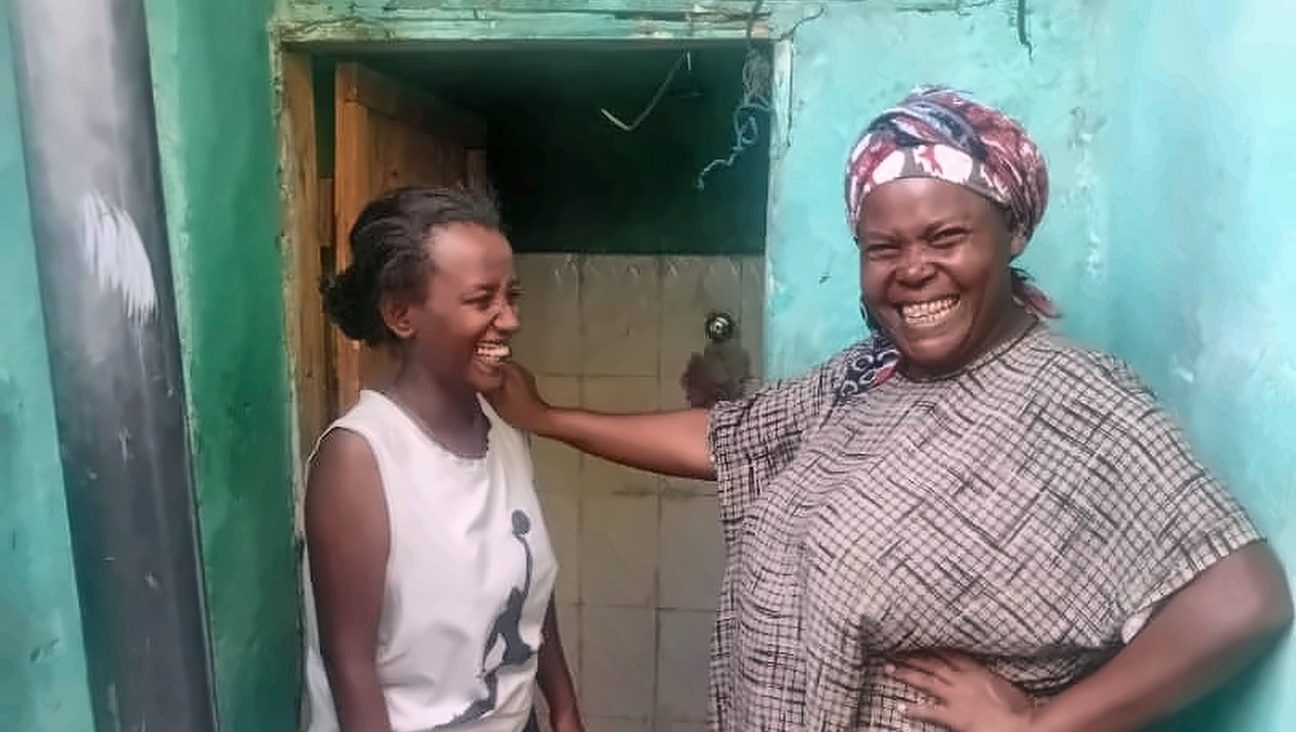
Debritu Amare’s home lies tucked away in a back alley of Bedhatu Kebele, a dense slum on the edge of Adama, one of Ethiopia’s fastest-growing cities. Here, there are few private places. The streets are narrow, the homes packed tightly together, and one of life’s most basic facility—a toilet—is often missing. Locals have a grim nickname for this neighbourhood: “the flying toilets quarter”. Flying, because most residents have no choice but to relieve themselves in plastic bags, which are then tossed into nearby alleys or open drains.
“Many feelings arise about our sanitation situation, but mostly shame”, says 48-year-old Debritu. “It’s hazardous to walk here, you can step into waste at any moment. We see people passing by with pinched noses, breathing through their mouths to avoid the stench. It’s embarrassing.”
Finding a private place to relieve oneself is a daily struggle. For women and girls, the burden is heavier still, navigating the dangers of seeking a toilet at night and managing menstrual health without privacy. “We often eat or drink less to minimise the urge to go to a toilet,” says Debritu. “It’s not good for our health.”
For people with reduced mobility, the situation can be even more degrading. Seble, Debritu’s daughter, recalls how her father, frail with age and illness, was unable to walk to a distant toilet. “We would cut a hole in a chair and place a pot underneath. With nowhere to dispose of the waste, we poured it into the sewer. We just felt deep shame for not having a toilet.”
A Health Crisis Hidden Behind Every Narrow Street
Debritu and Seble’s story is far from unique. According to the WHO/UNICEF Joint Monitoring Programme, only 17% of Ethiopia’s urban population has access to safely managed sanitation. In informal settlements like Bedhatu Kebele, that figure drops to almost zero.
“The sanitation challenge goes beyond inconvenience, it’s a serious health risk,” says Zinash Tesema, a local health worker and sanitation marketer with Bole Bible Baptist Church, who regularly visits the area. “There are some communal latrines, but they are often overcrowded, dirty, or out of service. Women face safety concerns when using them, especially at night.
“So, naturally, people look for other options: going into nearby forests, finding secluded spots near their homes, or, if they can’t manage that, resorting to flying toilets. But these alternatives bring their own dangers: the spread of water-borne diseases and infections, poor menstrual hygiene for women and girls, and contamination of local water sources. In densely populated areas like this, an outbreak can spread very quickly.”
A Toilet on the Veranda
For Debritu’s family, the situation radically changed when they were selected for a new pilot project by FINISH Mondial, implemented in partnership with Bole Bible Baptist Church and OCSICO Microfinance. The organizations co-developed a compact, affordable toilet model tailored specifically for small urban spaces. For Debritu, that meant converting a narrow corner of her changing veranda just big enough to stand in into a private, functioning toilet.
“It didn’t seem possible, this space is so small,” Debritu recalls. “But they showed us a design that would fit.”
Financing Dignity: How Microloans Are Unlocking Urban Sanitation
Space is one of the biggest barriers to sanitation access in urban Ethiopia, where an estimated 64% of the population lives in the cramped quarters of slum areas. Designing solutions that fit these conditions is essential—but space isn’t the only challenge.
Access to finance is the second major hurdle. That’s why, from the outset, FINISH Mondial built financing into its model, working with microfinance institutions to make toilet construction financially accessible to households. “It’s still a new frontier in Ethiopia,” says Jambo Ibsa, Manager at Siinqee Bank, one of the partners of FINISH Mondial. “Traditionally, people seek loans for all sorts of things, from house construction to small businesses, but toilets are seen as something you pay for yourself. Yet for many households, the cost of materials and labour is beyond reach. In these cases, a loan is often the only way to make it possible.”
A point echoed by Amanuel Tafese, Country Coordinator for FINISH Mondial in Ethiopia, who stresses the critical role of microfinance in breaking the cycle of poor sanitation. “Partnering with microfinance institutions has been essential to making progress,” he says. “Despite the various strategies employed by the government, NGOs, and other development partners over the years, we had never seen significant improvements, but this is now changing. By connecting all the dots through public–private partnerships, we are creating a sustainable shift in how the sanitation challenge is addressed.”
FINISH Mondial’s local partner in this endeavour agrees: “It’s not an exaggeration to say that FINISH Mondial has been a pioneer in showing that microfinance is part of the solution,” says Dereje Bekele, Manager of Bole Bible Baptist Church. “We’ve seen many people who once said they couldn’t build toilets because of the cost now able to do so.”
A Future Without Shame
Back in Debritu’s compound, the transformation is clear, not only in bricks and mortar, but in the family’s restored sense of dignity. The family took out a loan in 2022 and have already paid it back. Modest yet clean and private, the toilet now stands at the edge of their home, fully theirs. “I’m so grateful,” Debritu says. “We used to think about the toilet problem all day: where to go, when to go, how to manage. Now we’re free. Everyone in my house can use the toilet in privacy, at any time. It’s one less worry in our lives, and it gives us peace of mind.” In a place once defined by flying toilets and shame, that’s no small change.