

The year 2026 marks a defining moment for Africa’s water and sanitation sector, with the African Union declaring it the year of “Assuring Sustainable Water Availability and Safe Sanitation Systems to Achieve the Goals of Agenda 2063.” Collective action is now more urgent than ever to realise the vision of safe sanitation and clean drinking water for all across the continent.
Yet the scale of the challenge remains immense. Across Africa an estimated 779 million people still lack access to safely managed sanitation and 411 million lack access to clean drinking water. Addressing this gap requires more than ambition, it demands a shift in how these structures are financed.
“What we are seeing is not just an increase in numbers. It is a shift in the system itself—where local businesses, local institutions, and policymakers are taking ownership. That is where real sustainability begins.” – Salfiso Kitabo, Growth and Innovation Director for Africa (WASTE)
The answer goes beyond simply injecting grants and subsidies into community projects. To achieve lasting impact, we must work across the entire system mobilising private investment alongside public and donor funding to fuel sustainable change.
This message and proven approach underpin the partnership between WASTE, the lead partner of FINISH Mondial, and the African Union. They also formed the basis of WASTE’s recent contribution to a high-level side event organised by the Symposium of Episcopal Conferences of Africa and Madagascar (SECAM) during the 39th African Union Summit in Addis Ababa.
An approach rooted in practice
 During the event, WASTE shared insights on the global WASH crisis and raised a critical question:
How are we paying for it and who is covering the cost?
The sector remains heavily dependent on charity and public funding models, which on their own are insufficient to close the growing access gap. What is needed is a compelling investment case for WASH that can attract private sector capital and unlock new and more equitable financing streams to reach those on the edge of society.
Something which is already being put into practice through the FINISH Mondial programme.
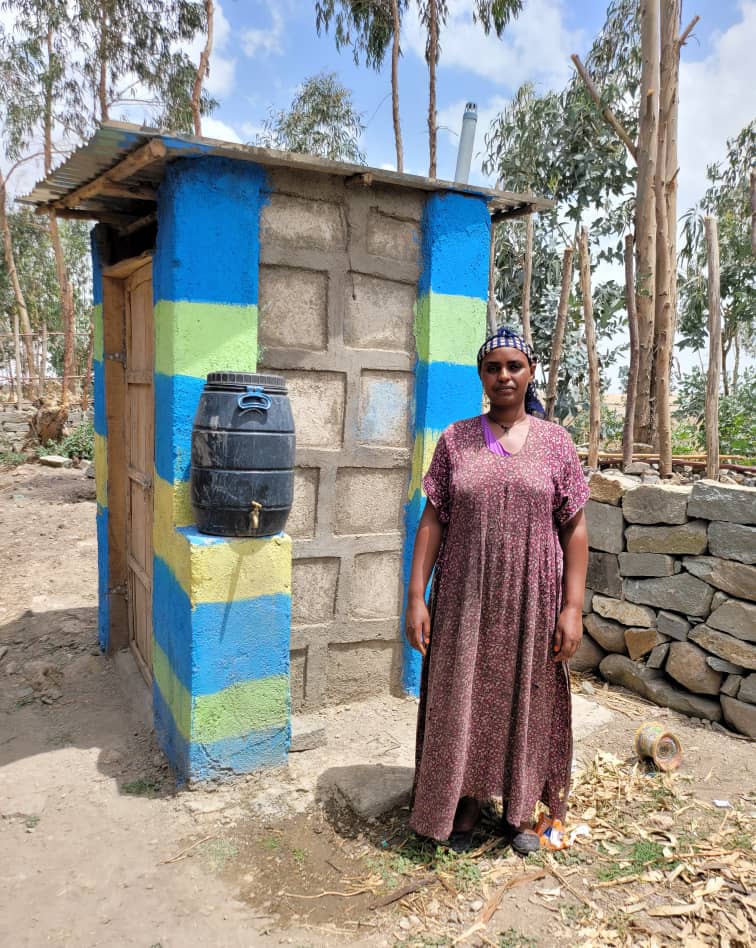
In Ethiopia, the programme began with modest results. In its early years, partners reported the construction of around 145 safely managed toilets annually despite relatively high levels of funding.
Today, that picture has dramatically changed.
With a strong network of local actors, and a budget of less than €100,000, more than 4,000 safely managed toilets have been delivered in a single year. This remarkable shift reflects not just improved efficiency, but a fundamental transformation in how sanitation services are being delivered and to who with many more marginalised groups gaining access.
It is the result of consistent effort, long-term commitment, and multi-stakeholder approach bringing together policymakers, communities, entrepreneurs, and financiers. Policymakers help shape enabling environments, communities drive demand, businesses deliver services, and financial institutions provide the capital needed to scale.
The experience from Ethiopia offers a concrete, scalable example of how this systems-based model can work in practice.
Influencing policy and building capacity
Building on this experience and aligned with the African Union’s WASH priorities for 2026, WASTE is now supporting Ethiopia’s Ministry of Water and Energy to strengthen private sector financing mechanisms in the sector.
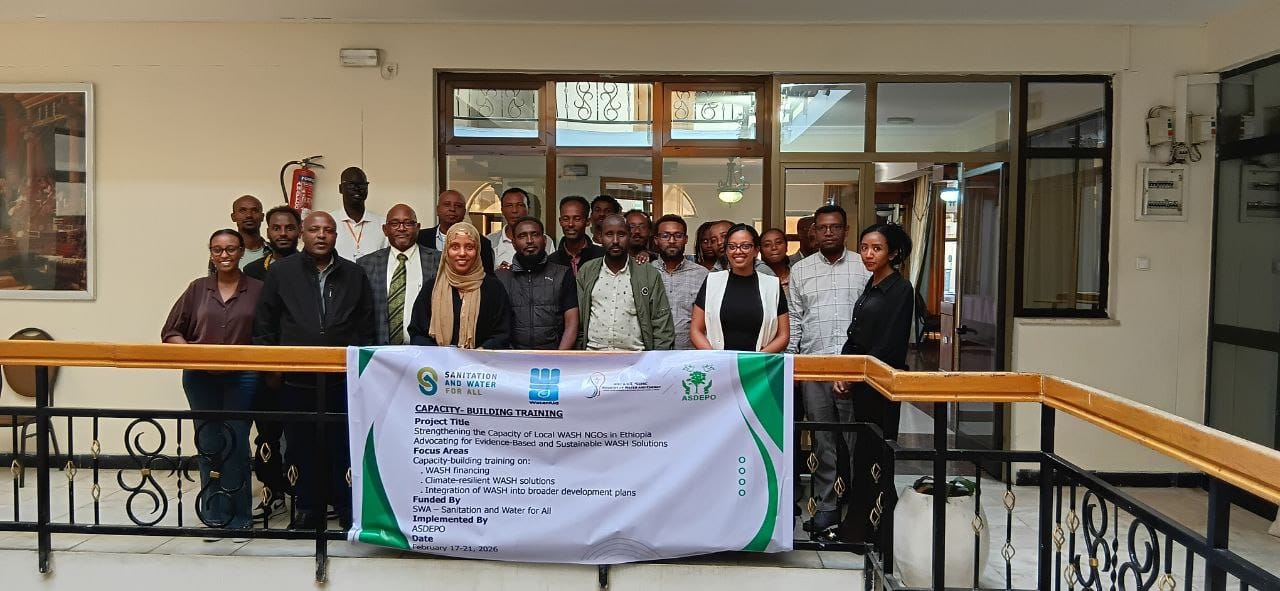
As a kick off to this, WASTE with the Ministry of Water and Energy conducted a training on WASH private sector financing models for more than 17 local NGOs, coordinated by the Action for Social Development and Environmental Protection Organization (ASDEPO). This initiative is backed by Sanitation and Water for All (SWA), through WaterAid, with the goal of attracting new investments into WASH.
These efforts signal a broader transition from isolated, project-based interventions to strengthening entire systems capable of sustainable scaling.
A broader movement for change
The momentum generated by the African Union’s 2026 agenda represents more than a milestone. It validates an approach that places local actors from across society at the centre, while actively engaging policymakers and mobilising private investment.
As Africa advances toward the goals of Agenda 2063 and globally we strive to achieve SDG 6 (clean water and sanitation) by 2030, the need for integrated, scalable, and financially sustainable solutions has never been clearer.
Through its partnership with the African Union and its on-the-ground experience through programmes like FINISH, WASTE continues to contribute to a future where safe sanitation and sustainable water systems are not aspirations, but realities built on whole system transformation.